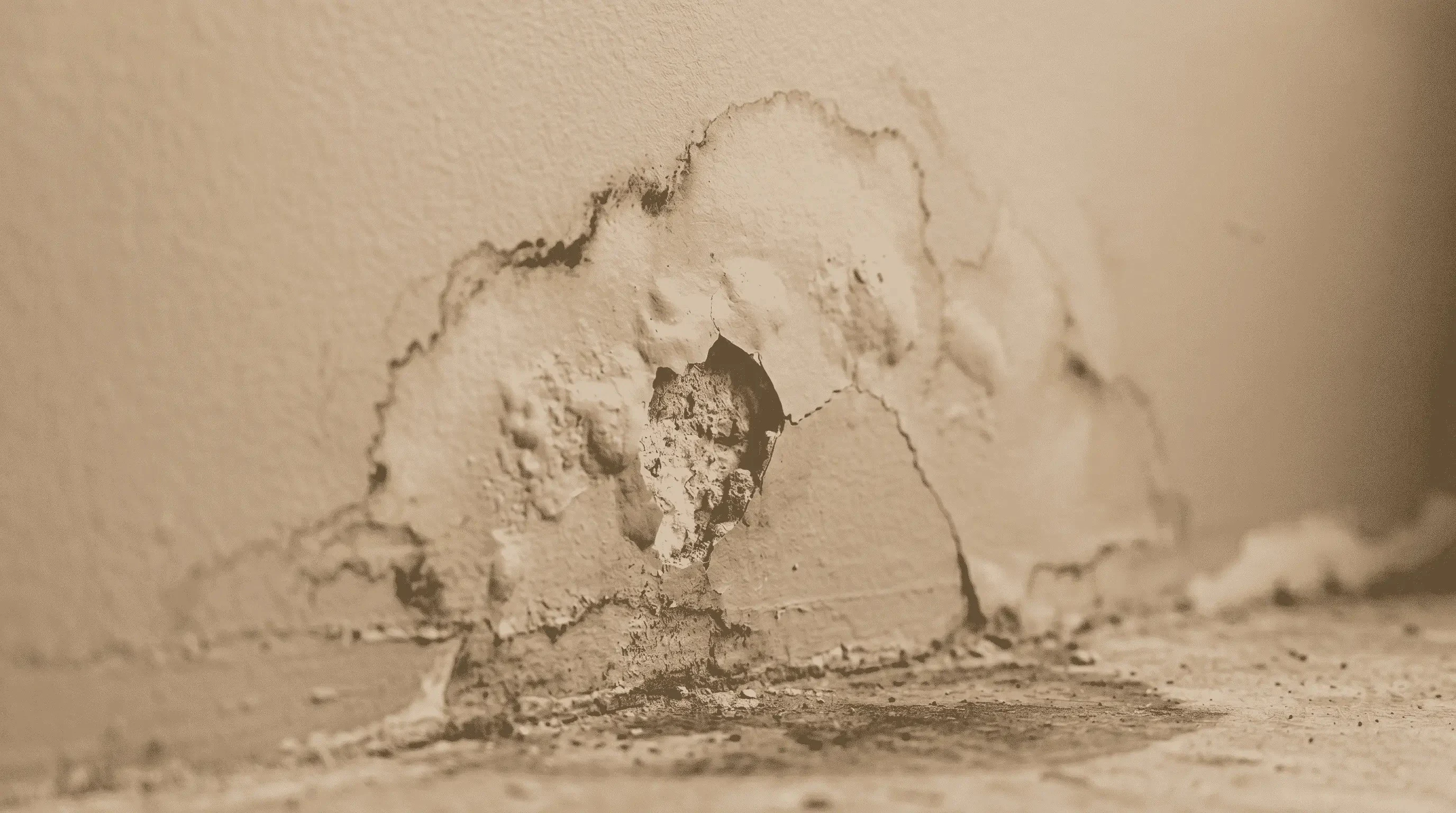
Hidden Wall Leaks: 7 Warning Signs Every Homeowner Should Never Ignore
If you think the most dangerous plumbing issue is a burst pipe flooding your basement, think again. The most destructive water damage in a home doesn’t happen out in the open—it happens silently, behind your drywall, out of sight.
A pinhole leak in a water supply line can drip slowly for months before you ever see a pool of water. By the time a hidden leak becomes obvious, you are usually looking at structural timber rot, compromised insulation, and hazardous black mold. For homeowners and builders, catching a leak early is the difference between a minor pipe repair and a structure reconstruction.
In a mountain environment like Shimla, where extreme seasonal temperature shifts can stress pipe joints and cause microscopic fractures, keeping an eye out for these silent warning signs is essential.
Let's skip the extra details and focus on the 7 critical indicators of a hidden wall leak that you should never ignore.
Quick Diagnostic Checklist
| Warning Sign | Primary Symptom | Most Likely Cause | Priority Level |
|---|---|---|---|
| 1. Unexplained Bill Increase | Sudden jump in monthly utility costs | Pressurized main water supply line leak | 🚨 Critical (Immediate shutoff needed) |
| 2. Persistent Musty Odors | Earthy, wet-cardboard smell in a room | Stagnant water pooling inside dark wall cavities | ⚠️ High (Risk of mold growth within 48 hours) |
| 3. Drywall Discoloration | Yellowish-brown "water rings" on walls/ceilings | Constant pinhole leak or failing pipe joint | ⚠️ High (Active degradation) |
| 4. Bubbling / Peeling | Flaking paint or lifting wallpaper | Moisture migrating outward through drywall paper | 📅 Moderate (Investigate immediately) |
| 5. Structural Sagging | Spongy, soft, or bowing drywall panels | Severe water accumulation loading down material | 🚨 Critical (Risk of ceiling collapse) |
| 6. Floor Buckling | Lifting plank edges or warped baseboards | Gravity pulling wall leak down to floor foundation | 🚨 Critical (Risk of ruining subflooring) |
| 7. Hissing / Ticking Sounds | Rushing water sounds when faucets are off | Split pressurized supply line or thermal expansion | 🚨 Critical (Active flowing leak) |
1. An Unexplained Increase in Your Water Bill
Your monthly utility bill is often the first indicator of a hidden Wall Leak. If your household water usage habits haven’t changed, but your monthly bill is steadily climbing, water is escaping from your system somewhere.
The Diagnostic Test:
You can easily verify this using your main water meter. Turn off every single faucet, appliance, and water valve inside and outside your house. Go look at your water meter and write down the numbers, or check the low-flow indicator dial. Wait roughly 30 to 60 minutes without using any water, then check the meter again. If the numbers have moved, you have an active leak, and if not then you are safe.
2. Musty, Earthy Odors That Don't Go Away
Enclosed wall cavities are dark, stagnant spaces. When a pipe drips inside a wall, the drywall and wooden framing soak up the moisture like a sponge. This persistent dampness creates the perfect breeding ground for mold and spores.
If you notice a heavy, musty, or earthy smell in a specific room—similar to a damp basement or wet cardboard— but the room looks perfectly clean, a leaking pipe is likely the reason. Mold can begin to colonize inside wall spaces within 24 to 48 hours of moisture exposure, making this a sign that requires immediate action to protect your home's air quality.
3. Discoloration, Stains, and "Water Rings" on Drywall
When water pools against the back of plaster or drywall, it slowly migrates through to the finished side facing your living space. This leaves behind: a water stain.
Look out for patches of drywall that turn a faint yellowish, brown, or dark gray color. These stains often form expanding concentric rings as the water drips, dries slightly, and drips again.
To your ceilings and the lower sections of walls near bathrooms, and kitchens. If a stain feels damp to the touch or soft when pressed gently, the leak is active and ongoing.
4. Bubbling Paint or Peeling Wallpaper
Modern interior paints and wallpapers are designed to act as a cohesive barrier over your walls. However, they cannot withstand moisture pushing through from the inside-out.
As water saturates the drywall beneath, it breaks down the adhesive bond holding wallpaper or the primer bond holding your paint. This causes the paint to blister, bubble, or crack open. Wallpaper will begin to peel away or damp bubbles wil start to appear.
5. Sagging Ceilings and Warped or Soft Walls
Drywall is fundamentally made of compressed gypsum plaster pressed between thick sheets of paper. When it stays wet, it loses all structural integrity.
A hidden leak will eventually cause drywall to warp, sag, or buckle under its own weight. If you notice a ceiling bowing downward or a wall that looks slightly curved when you look on its edge, water is pooling behind it. If you press your thumb against such a spot and the wall feels spongy, soft, or crumbles easily, the material is fully soaked and requires immediate replacement alongside the pipe repair.
6. Buckling, Cupping, or Discolored Flooring
Water naturally follows the path of least resistance, which means gravity will eventually pull a wall leak down to your floorboards.
If you have hardwood, laminate, or luxury vinyl plank flooring running alongside a wall, look down at the seams. If the edges of the planks are lifting, bending upward, or turning dark near the wall, water is running down inside the wall cavity and pooling underneath your flooring framework.
7. The Sound of Running Water When Everything Is Off
When the house is completely quiet at night, at times there is a subtle sound. If you can hear a steady rushing or hissing sound when no showers are running, no toilets are flushing, and the washing machine is off, you are likely hearing a pressurized pipe leak.
A ticking sound often occurs as hot water pipes expand and rub against wooden wall studs, but a steady rushing or hissing sound points directly to a cracked or split supply line constantly venting water behind the drywall.
Summary: What to Do Next?
If you checked off one or more of these warning signs, do not wait for the problem to get worse.
Isolate the Leak:
If you can pinpoint the room, turn off the local isolation valves. If the source is unknown, turn off your home's main water supply valve immediately.
Locate the Source Professionally:
Before knocking down large sections of drywall, use a non-invasive tool like a digital thermal imaging camera or a moisture meter to map out the exact path of the water behind the wall.
Repair the Leak:
If the failure point is a cracked cold-water line, replace it with high-grade PVC. If it is an internal hot or cold supply line under pressure, ensure it is completely cut out and replaced using properly welded, temperature-resistant CPVC pipes and fittings.
Catching a wall leak early saves your structural framing, preserves your health from mold exposure, and keeps your repair costs manageable. Stay vigilant, monitor your water usage, and never ignore what your walls are trying to tell you.
Frequently Asked Questions (FAQ)
Locating a hidden leak no longer requires blind guesswork or smashing holes through your plaster.
Professional plumbers and structural inspectors use non-invasive diagnostic tools to pinpoint moisture channels.
The two most effective methods are-
i. Digital moisture meters, which measure the electrical conductivity of the drywall material.
ii. Thermal imaging cameras.
As water cools down as it evaporates, a thermal camera will reveal a distinct, dark blue or purple cold spot right where the moisture is concentrated, showing you exactly where to cut to make the repair.
In most standard homeowners insurance policies, coverage depends entirely on the cause and speed of the leak. Insurance typically covers sudden and accidental plumbing failures—such as a pipe that suddenly cracks or bursts under pressure.
However, if a leak has been dripping slowly for months due to poor maintenance, rusted pipes, or aging materials, insurance companies often classify it as wear-and-tear and deny the claim.
However, it is important to note that while insurance may cover the "hidden damage" (like replacing ruined drywall, flooring, or cabinets), they rarely pay for the actual piece of pipe that needs to be fixed.
Mold grows much faster than most people realize. Microscopic mold spores exist naturally in the air, but they require moisture, darkness, and a food source (like the paper backing on your drywall or wooden wall framing) to colonize.
NOTE: Under ideal conditions, mold can begin to form and multiply within 24 to 48 hours of initial water exposure.
If a hidden wall leak is left completely unaddressed for more than a week, a major mold colony can develop inside the wall layout, which poses respiratory health risks and requires professional remediation.
This is a dangerous misconception.
Homeowners sometimes hope that hard water minerals or scale buildup will naturally clog a tiny pinhole leak and seal it up.
While mineral deposits might occasionally slow down the water flow temporarily, the water pressure inside your supply lines will eventually force its way through.
Furthermore, a pinhole leak is usually a sign of internal pipe corrosion or structural fatigue. If left alone, the pipe wall will continue to thin out, and that tiny drip will inevitably transform into a major burst pipe.
Older homes utilizing galvanized iron or copper pipes are highly prone to hidden leaks due to internal corrosion, and weak soldered joints over decades of service.
Among modern plastic systems, standard white PVC is highly susceptible to cracking and joint failure if it is incorrectly installed on hot water distribution lines.
To prevent hidden wall leaks inside your home's structure, interior pressurized hot and cold water lines should always be constructed using high-quality, temperature-resistant CPVC or flexible PEX systems.
NOTE: In truth high-quality cpvc pipes will cost you more in short run but save you money, time, energy in the long run.


